Discover the BlazorPlate Powerhouse
Multitenancy strategy? Decided. Auth architecture? Decided. Caching layer? Decided. Observability pipeline? Decided. Your team gets to skip straight to building what makes your product unique.
⚡ Built for modern SaaS platforms
Engineered with an Elite Tech Stack
Leverage a Future-Proof Stack for Unmatched Performance
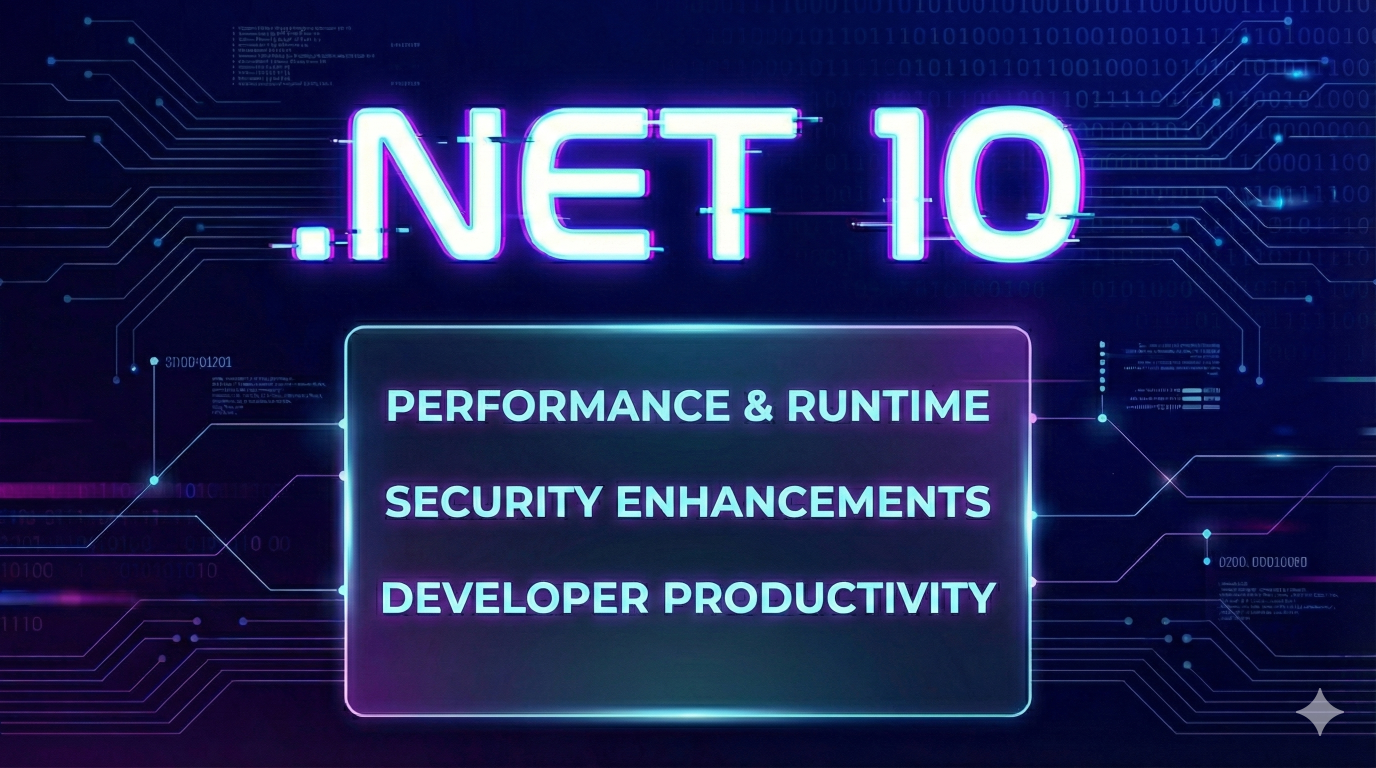
BlazorPlate is built on .NET 10 with a frontend-agnostic architecture that ships with Blazor WebAssembly out of the box and can be replaced with Angular, React, or any JavaScript framework, a clean layered architecture, and CQRS via MediatR. Three portal topologies ship out of the box: Tenant Administration Portal (TAP), Tenant Portal, and a standalone Onboarding Portal, all running from a single deployment. Two developer modes (Aspire and Native) let you choose between Docker-orchestrated consistency and bare-metal startup speed.
Clean Architecture
Build on a proven layered codebase that grows with your product. New features slot cleanly into their proper place without disturbing what's already working, making every extension, refactor, and developer onboarding faster and less risky. Full Dependency Injection throughout keeps your code testable and loosely coupled from day one. Domain, Application, Infrastructure, and Presentation layers enforce strict dependency direction so no business rule depends on a framework, database, or UI technology.
Technical details →Multiple Development Modes
Aspire Mode spins up a complete local stack (SQL Server, Redis, and storage) in Docker containers in minutes, giving every developer an identical, production-like local environment. New developers can be fully operational in under 2 minutes with no manual setup required. Native Mode connects directly to local services, ideal for developers who want raw inner-loop speed. Switch between modes with a single setting; the entire application code stays identical.
Technical details →Portal Architecture (TDAP + TOP)
Run three distinct portals from a unified codebase: a Tenant Administration Portal (TAP) for your team, Tenant Portals delivered at each customer's own subdomain, and a standalone Tenant Onboarding Portal (TOP) that lets customers self-register and provision their environment with no manual intervention from your side. TDAP (TAP + Tenant Portals) is a single deployment; TOP runs as a companion deployment on its own port. Tenant resolution from subdomains, request headers, or query strings is handled automatically across both deployments.
Technical details →Demo & Onboarding
Get from clone to fully running application in under 2 minutes. Pre-seeded demo data, default admin accounts, and step-by-step troubleshooting guides let your team explore every feature immediately, with no scripts, no manual database setup, no friction. The Tenant Onboarding Portal handles self-registration end-to-end, so you can demo the full SaaS customer acquisition flow right out of the box. Default credentials and entry URLs for every user persona are clearly documented, so your team can start exploring all portal areas immediately.
Technical details →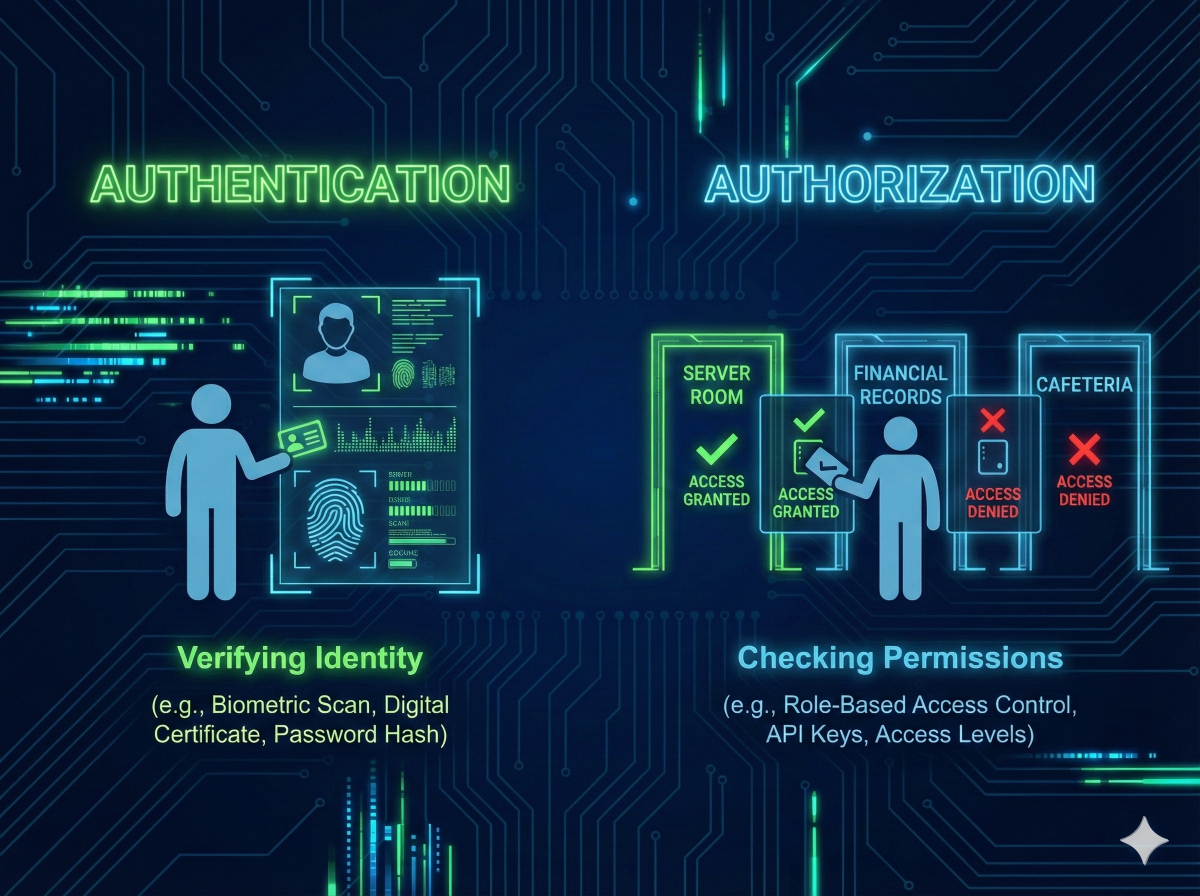
Advanced Identity & Access Management
Secure Your Application with Battle-Tested Identity Protocols
A complete authentication and authorization system built on ASP.NET Identity with JWT-based auth, Two-Factor Authentication, and OAuth social login. The dynamic permission system auto-discovers endpoints at startup, with no static permission lists to maintain. Role inheritance, claims-based authorization, and per-user overrides provide enterprise-grade access control out of the box.
Dynamic Permissions
Say goodbye to hardcoded role checks. BlazorPlate automatically discovers all API endpoints and real-time hub methods at startup and maps them to a permission model your administrators can manage from the GUI. Grant or revoke access to any user or role in real time: no code change, no redeployment, instant effect.
Technical details →JWT + HttpOnly Cookies
Industry-standard JWT access tokens paired with secure HttpOnly refresh token cookies protect against the most common web attack vectors. Tokens rotate and revoke automatically on every refresh cycle. Token lifespans and password rules are configurable from the admin panel without restarting the application, giving operators full control over session security.
Technical details →Two-Factor Authentication
Add a critical second layer of protection to every account. Users verify their identity via an authenticator app one-time code in addition to their password, with recovery codes for emergency access. The complete sign-in, sign-up, password reset, and email-based account activation flow is included out of the box.
Technical details →OAuth & Social Login
Let users sign in with accounts they already trust: personal Microsoft accounts, Google, LinkedIn, and Twitter via OAuth 2.0. Incoming OAuth identities are automatically linked to existing accounts by verified email, so users keep their full history and permissions regardless of which login method they choose.
Technical details →Identity Impersonation
Let your support and admin teams log in as any user to reproduce issues, verify configurations, and resolve problems, without ever asking for passwords. Every impersonation session is fully audited, clearly flagged in the UI, and restricted by role-based permissions, so your team can diagnose faster while your customers' trust stays intact.
Technical details →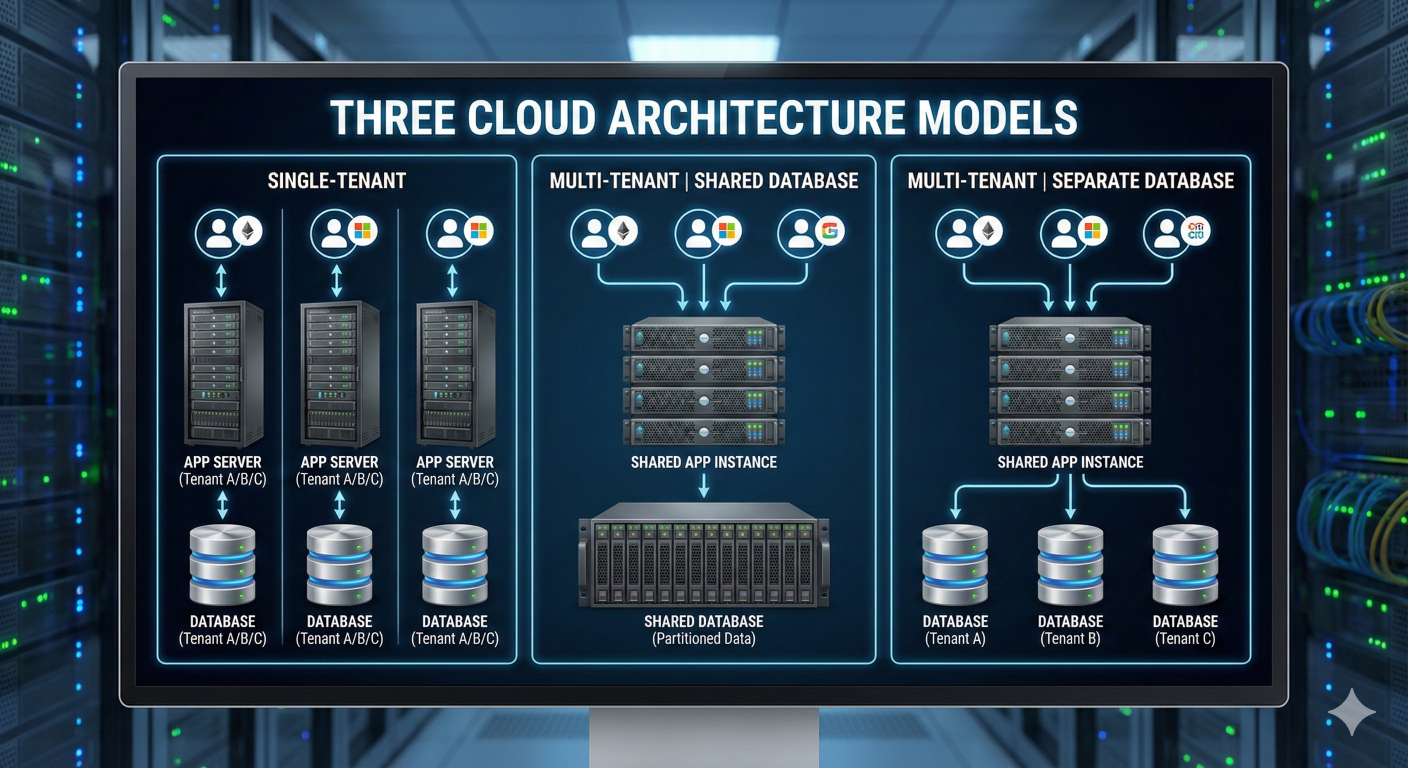
SaaS-Ready Architecture with Built-in Multi-Tenancy
Launch Your SaaS Empire with a Scalable, Multi-Tenant Architecture
BlazorPlate ships three isolation strategies: Single-Tenant, Shared-Database Multi-Tenant, and Separate-Database-Per-Tenant. Tenant resolution from request headers, query strings, or subdomains happens automatically. Per-tenant data access is enforced via global query filters, with no manual scoping required in application code. Switch strategies without touching a single line of business logic.
Tenant Isolation Strategies
Pick the data isolation model that fits your business: a shared database for cost-efficient multi-tenancy, a dedicated database per tenant for maximum data sovereignty, or a single-tenant deployment for enterprise clients who demand full isolation. Data boundaries are enforced automatically at every query, with no additional developer effort or boilerplate required.
Technical details →Zero-Restart Tenant Provisioning
Onboard new customers without touching the running system. When a tenant registers, their database and initial configuration are fully provisioned in the background with zero maintenance windows and zero deployment pipelines. The entire provisioning workflow runs as a tracked Hangfire job, making every step auditable and retryable.
Technical details →Admin Dashboard & Tenant Management
Manage your entire SaaS platform from a single, polished Tenant Administration Portal (TAP). Create, configure, and suspend tenant accounts, control system-wide settings, and administer users, roles, and permissions, all from one place. Demo mode with pre-seeded admin accounts lets your team evaluate every feature on the very first run.
Technical details →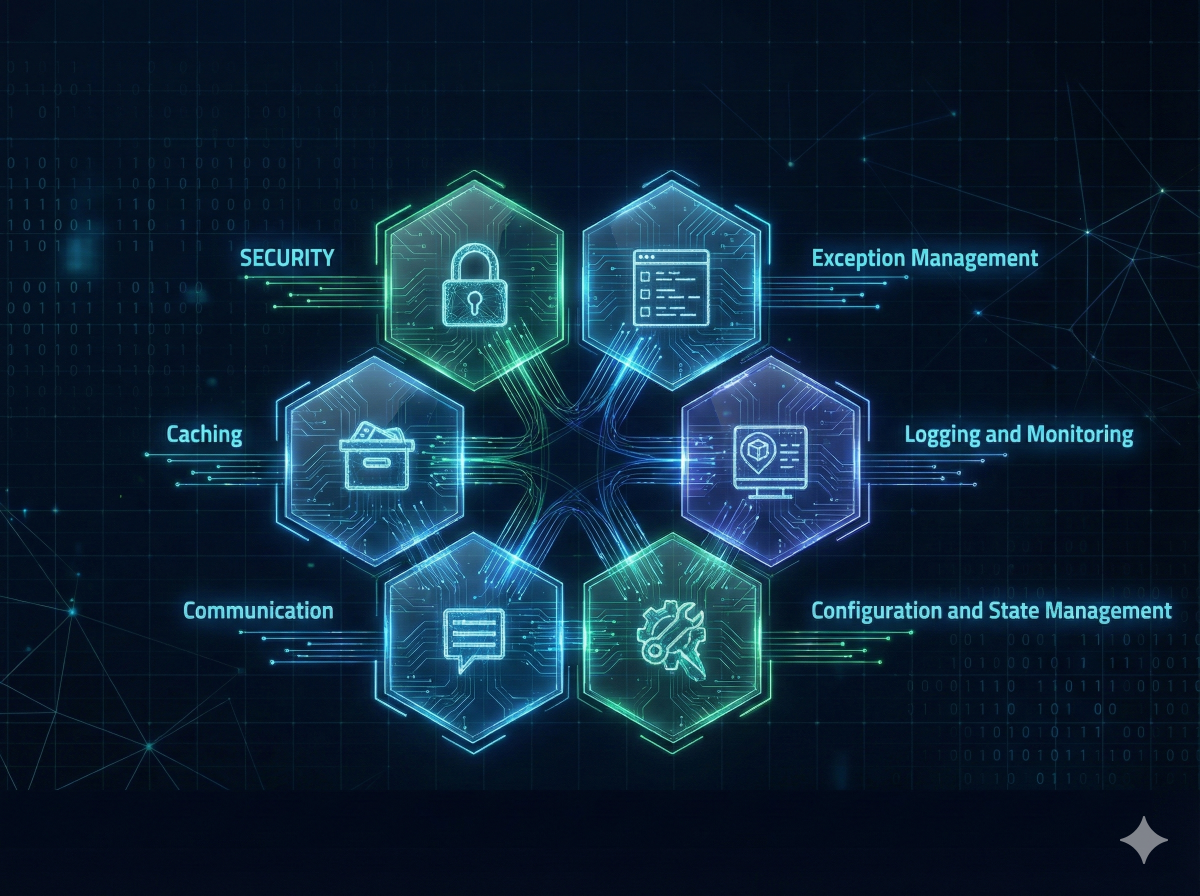
Enterprise-Grade Data & Performance Infrastructure
High-Throughput Data Access with Resilient Caching
Built on EF Core 10 with strategy-based initialization, automatic tenant-aware query filtering, and full migration support. A two-layer hybrid caching system combines in-process L1 memory cache with distributed L2 Redis cache. Pluggable file storage supports both On-Premises and Azure Blob Storage. Background job processing via Hangfire ensures long-running work never blocks the request thread.
EF Core 10 Persistence
Enterprise-grade data access on EF Core 10 with automatic schema creation, seeding, and migration support from the very first startup. Built-in optimistic concurrency protection prevents data corruption when multiple users edit the same records simultaneously. Roles, permissions, and demo data are seeded automatically; the database is ready the moment you launch. Soft-delete support and full audit trails (CreatedAt, CreatedBy, UpdatedAt, UpdatedBy) are applied globally via the SaveChanges pipeline so every entity benefits without any per-class ceremony.
Technical details →L1+L2 Hybrid Caching
A two-layer caching system keeps your application fast at any scale. Frequently accessed data is served from in-process memory for near-zero latency, while a distributed Redis layer keeps data consistent across all application instances. If Redis becomes unavailable, the system automatically continues from memory with zero downtime and no manual intervention. Named cache profiles keep expiry policies consistent and predictable across the entire team.
Technical details →Background Jobs (Hangfire)
Offload long-running work (reports, emails, bulk operations) to a durable background queue powered by Hangfire. Jobs are persisted to SQL Server, survive application restarts, and retry automatically on failure. Real-time SignalR notifications keep users informed of job progress, with full end-to-end tracing so every background execution appears as a complete workflow in your dashboards.
Technical details →File Storage & Upload
Switch between on-premises file storage and Azure Blob Storage with a single configuration change: no code edits, no redeployment. Files are automatically organized into tenant-specific directories, keeping every customer's data cleanly separated. Built-in filename security validation protects against malicious uploads right out of the box.
Technical details →
Powerful Automation & Multi-Channel Communication
Connect, Notify, and Automate Without the Boilerplate
From transactional emails and real-time SignalR notifications to background PDF generation, BlazorPlate ships a complete automation and communication stack ready for production. Every channel is multi-tenant-aware and wired with OpenTelemetry tracing out of the box.
Real-Time Communication (SignalR)
Add live, bidirectional communication to your application with full multi-tenant isolation built in: every connection is automatically scoped to the correct tenant, making cross-tenant data leakage structurally impossible. Hub and method-level permission enforcement mirrors your REST API authorization model. Connections recover automatically from network disruptions with graceful exponential backoff.
Technical details →Notifications
Send transactional emails immediately or queue them for high-volume throughput via Hangfire background jobs. Rich email templates cover registration confirmation, password resets, and account management notifications. A development bypass prevents accidental sends during testing. SMS delivery can be integrated with any provider (Twilio, AWS SNS, Azure Communication Services) by implementing a single interface.
Technical details →Reporting & PDF Generation
Generate professional PDF reports on demand or in the background for large data sets, powered by a built-in PDF engine. Background reports run without blocking users, with real-time SignalR progress notifications keeping them informed from start to finish. All reports are automatically scoped to the requesting tenant, ensuring complete data isolation. Background report jobs progress through Pending, InProgress, and Completed states persisted to SQL Server, so failed exports are automatically retried.
Technical details →Database Flexibility
BlazorPlate ships with SQL Server as the default database. Because the data access layer is built on Entity Framework Core, teams can migrate to other relational database engines such as PostgreSQL, MySQL, SQLite, and Oracle without restructuring the application architecture. A dedicated PostgreSQL migration guide is available, and migration guidance for other providers can be made available upon request.
Technical details →End-to-End Journey Tracing
Track every step of every request as a single, coherent timeline spanning APIs, databases, and background workers, without writing a single line of instrumentation code. When a Hangfire job fires, it continues the same distributed trace as the originating HTTP request, so no step in your workflow is ever invisible. Noise filtering, automatic PII redaction in distributed trace spans, and six pre-wired business metrics are included and active from day one.
Technical details →Structured Logging
Developer-friendly colored console output during local development; machine-parseable structured JSON in staging and production. Compatible with Azure Monitor and any OTLP-compatible log aggregation platform. The right format is selected automatically, with no manual switching needed. Correlation IDs, tenant and user context are automatically enriched onto every trace span, making cross-service correlation effortless.
Technical details →Health Checks
A /health endpoint lets load balancers, Kubernetes orchestrators, and monitoring systems verify your application's readiness at any time. Database checks are always registered; Redis and storage checks activate automatically when the corresponding connection strings are configured. No custom health check code required.
Deep Customization for Every Audience
Tailor Every Aspect of the Platform Without Rebuilding from Scratch
BlazorPlate ships comprehensive localization support, the full MudBlazor UI component library built on Material Design, and a three-layer runtime settings system. Adapt language, UI, and behaviour for any market, all without redeployment.
Internationalization & Localization
Deliver a fully localized experience to users in any language. BlazorPlate automatically detects each user's preferred language and serves appropriately translated content, with graceful fallback to the default language when a translation is unavailable. The abstraction-based design makes it easy to pull translations from resource files, a database, or a CMS; swap sources without touching application code. Date, time, and currency formats are automatically adapted to each user's regional settings, delivering a consistent experience worldwide.
Technical details →Dynamic Data Translation
Store and serve user-facing content in multiple languages without changing your database schema. The LingoTextField field type persists translations for any text column in a single, schema-transparent format, with no separate translation tables or migration headaches. Add a new language for any entity at runtime, with automatic fallback to the default locale when a translation is missing. Translation reads are resolved at the application layer using the current request culture, eliminating the need for database joins, views, or language-specific query logic in your handlers.
Technical details →MudBlazor UI
Build beautiful, responsive interfaces with the full MudBlazor component library: data grids, charts, forms, dialogs, and dozens more components based on Material Design. A vibrant, community-driven framework with an adaptable, responsive design. Fully replaceable with Infragistics, Syncfusion, or Telerik without touching a single line of server-side business logic. A pre-configured theme system, dark-mode support, and responsive layout primitives are wired into the shell from day one, so new pages inherit your brand colors and spacing rules automatically.
Technical details →Runtime Settings Management
Give operators complete control without requiring a redeployment. Password complexity rules, token lifespans, sign-in lockout thresholds, and file storage type are all adjustable from the admin panel and take effect immediately, with no restarts required. Settings use a layered model, blending static configuration with live admin overrides, keeping every change consistent and auditable. No infrastructure team or environment variable changes are ever needed.
Technical details →